

Dr. Autumn Elniski
PhD, MS, MS, BS
Instructional Support Specialist in Chemical Engineering
Adjunct Faculty in Chemistry
Phone:
716-392-4995
Email:
Instructional Support Specialist Contact: arelnisk@esf.edu
Adjunct Faculty Address: a.elniski@sunyocc.edu
Address:
1 Forestry Drive
Syracuse, NY 13210
CV (PDF):
Letters of Recommendation:


Overview of CV
Note: Any items in the CV that are Bold, Underlined, and Italicized are linked to pages with additional information.
The Bold Titles in the Overview of CV Section link to various parts of the CV. Scrolling past the Overview will bring you to the beginning of the CV (About Me).


About Me
My name is Autumn Elniski and I grew up in the city of Buffalo, NY. I developed a passion for science as a child and it has blossomed into a love of learning and teaching science. I studied Aquatic Ecology and Forestry in high school and journeyed into engineering in college. Focusing on renewable resources, I studied and worked with pulp and paper, industrial wastewater treatment, and biomaterials through my experience at the State University of New York College of Environmental Science and Forestry. Additionally, I followed my interests in improving science literacy and education by studying Teaching and Curriculum and Instructional Design at Syracuse University.
My greatest goal is to enhance and implement new methods of teaching collegiate-level learners about science and engineering. Advancing science literacy is an imperative aspect of improving our society. I firmly believe that anyone and every can learn science, and that all should have equal access to resources to understand science. Outside of the collegiate level, I aim to work with the general population and local communities to communicate scientific concepts in a common vernacular to build understanding and specific registers for scientific discourse.
My teaching and research interests incorporate renewable resources and wastewater treatment. I am excited to teach generations new and old about pulp and paper engineering. Paper is a product that is versatile and present in our everyday lives. The movement towards more sustainable materials in the social and commercial marketplace advocates for the continued research and expansion of paper applications to offset non-renewable products. However, with the digital and environmental narrative shifts in popular culture, paper has become a misunderstood material. I strive to help address misconceptions about paper in the general public and educate engineers to work in the pulp and paper fields.
Renewable resources are also an important facet to consider in the journey towards more sustainable practices. My area of focus is lignocellulosic materials, or trees, grasses, and agricultural residues. I am interested in learning about how these fiber sources can be utilized to make new physical products and how these fiber matrices can be processed to create value-added byproduct streams that can offset our reliance on fossil fuel-based materials. Additionally, I wish to teach others about the importance of these resources and the potential lignocellulosics have in new products and materials.
Wastewater treatment is another passion of mine. I worked directly with industrial wastewater treatment while employed in the industry and it is a subject I love to discuss. Many of the methods utilized to process lignocellulosic materials into new products and compounds require a large amount of water, especially in paper manufacture. To be good stewards of the land, we need to ensure water is cleaned before returning it to the environment. Industrial wastewater treatment is an increasingly important topic in manufacturing facilities. I hope to help students entering the industry better understand the application of wastewater treatment technologies to maintain the health of our water systems and local environments.
I am also passionate about science education, especially at the collegiate level. While much of K-12 education has been targeted with concentrated educational efforts like NGSS, there is no national standard for collegiate education. Every college has objectives that students should meet upon graduation, but much of the course design is left to individual professors who may or may not have experience in teaching and pedagogy. Being a student in collegiate science and engineering for over ten years, I have experienced positive and negative aspects to our current instructional practices employed in the university. I wish to employ the Instructional Design process in combination with contemporary educational practices like inquiry-based learning, multimodal methods of communication, progress-based and competency-based assessments and examinations, mutual construction of knowledge and understanding, and student-centered learning experiences to transform our collegiate science educational practices.
Throughout this work, I strive to implement strategies to foster diversity, belonging, inclusion, equity, and accessibility wherever possible. This is one of the greatest barriers to scientific literacy and advancement. Everyone should be invited to the science party to create a diverse group of participants. However, inviting people to the party to "check off boxes" is not enough. Partygoers need to feel like they belong at the party or else they will not attend. This is the step between diversity and inclusion. Fostering inclusion is the process of ensuring all voices are heard and accounted for in the planning of the science party. Creating solutions to multifaceted problems can only be achieved if all stakeholders and all those impacted by the decision are present at the table. This is imperative in both the practice of science and the teaching of science and engineering. Equity is the process of asking whether the party is even the appropriate plan and dismantling systems that do not serve all of those invited to the gathering. Accessibility ensures that any and all materials and processes created during decision-making resolutions can be accessed by everyone.
This starts with redefining the belief of who is "allowed" to do science, what science looks like, how we practice and teach science, how we can incorporate other ways of knowing to improve our understanding of the world alongside science, how we can restructure our current science and education systems to dismantle oppressive practices, and how we can make science accessible for everyone by removing paywalls and creating media that all can interact with. These ideas are just the start of the work that needs to be done to improve science literacy and access. I am committed to doing what I can to advocate for and implement these ideas and practices in my science work.
Finally, my desire through research is to better understand, apply, and promote the utilization of renewable resources and processes for energy and product solutions, and the curtailment of nonrenewable materials in the marketplace. Areas of interest include, but are not limited to, the pulp and paper industry, lignocellulosic biomass, biological wastewater treatment, and biogas generation from microbial seeds. I aim to achieve these goals directly through the workplace as a researcher, industrial manager, or instructional designer for company practices, or indirectly through instruction of a new generation of collegiate STEM scholars as a faculty member at an esteemed college or university.
A guide to this CV: A PDF version of this CV is available at the top of this page. A more visual CV can be found below. Headings that are Bold, Underlined, and Italicized (Like This) are linked to pages with additional information about that portion of the CV.
Updates to this CV page and associated PDF are currently In Progress. Items will be continuously updated as new journeys are experienced!
Education
August 2017 - May 2023
May 2018 - May 2023
August 2015 - May 2017
August 2010 - May 2015
August 2006 - June 2010
Doctorate of Philosophy in Biomaterials Engineering
State University of New York College of Environmental Science and Forestry; Syracuse, NY
Cumulative GPA: 4.000
Graduate Research Project Assistant: July 2017 - December 2022
Herman L. Joachim Graduate Fellow: July 2017 - June 2019
Dissertation: "The Effect of Hot Water Extraction of Lignocellulosic Biomass and Recovered Lignin Addition on Fuel Pellet Properties"
Master of Science in Teaching and Curriculum
Syracuse University; Syracuse, NY
Cumulative GPA: 3.967
Future Professoriate Program
Certificate in University Teaching (December 2022)
Master of Science in Paper Engineering
State University of New York College of Environmental Science and Forestry; Syracuse, NY
Cumulative GPA: 3.940
Herman L. Joachim Graduate Fellow: August 2015 - June 2017
Thesis: "Biogas Production from the Anaerobic Codigestion of Office Paper and Cow Manure in a Batch Reactor"
Bachelor of Science in Paper Engineering
State University of New York College of Environmental Science and Forestry; Syracuse, NY
Cumulative GPA: 3.862
Departmental Scholar for the Graduating Class of 2015
NOCTI Certified Advanced Regents Diploma in Conservation with a Vocational Major in Aquatic Ecology
McKinley Vocational Highschool; Buffalo, NY
Cumulative GPA: 3.972
Valedictorian for the Graduating Class of 2010
Work Experience
Academic and Instructional Appointments
January 2023 - Present
Department of Chemistry and Physical Sciences
State University of New York Onondaga Community College; Syracuse, NY
-
Adapted and implemented lecture materials and instructional activities for CHE 171 – General Chemistry I Lecture, CHE 171L – General Chemistry I Laboratory, CHE 121L – Introductory Chemistry Laboratory; CHE 172L – General Chemistry II Laboratory
-
Revised laboratory handouts, instructional materials, and experimental procedures to improve clarity, organization, and student success
-
Designed and implemented “Beaker Briefs” for General Chemistry I Laboratory, concise visual laboratory reference guides integrating experiment objectives, calculations, safety information, waste disposal procedures, and key concepts into at-bench instructional resources for students
-
Fostered an inclusive laboratory learning environment by adapting instruction and providing individualized guidance to students with diverse academic backgrounds
August 2023 - May 2025
Department of Chemistry and Department of Chemical Engineering
State University of New York College of Environmental Science and Forestry; Syracuse, NY
-
Developed and implemented instruction for several undergraduate and graduate engineering and chemistry courses:
-
FCH 150 (General Chemistry I Lecture)
- PSE 465 (Paper and Fiber Properties)
- ECH 355 (Engineering Design Economics)
-
ECH 202/PSE 570 (Principles of Mass and Energy Balances)
-
PSE 462/662 (Papermaking Processes I)
-
PSE 478/678 (Papermaking Processes II)
-
-
Applied instructional design principles and modern pedagogical practices through the redesign and restructuring of learning objectives, assessment materials, and course activities
-
Created instructional materials including syllabi, lecture content, in-class activities, homework assignments, quizzes, examinations, worksheets, and projects
-
Supervised and mentored graduate and undergraduate teaching assistants while coordinating instructional activities across multiple courses
-
Supported student success through office hours, review sessions, individualized feedback, and continuous improvement of instructional materials
-
Contributed to departmental service through ABET accreditation documentation, curriculum development, and faculty course assessment reporting
January 2026 - Present
Instructional Support Specialist SL-4
Department of Chemical Engineering
State University of New York College of Environmental Science and Forestry; Syracuse, NY
Curriculum Development, Instruction, and Academic Leadership
-
Enhanced PSE 462 (Papermaking Processes I) by developing instructional materials and learning activities that integrate laboratory experiences, engineering design, project management, pilot-scale manufacturing, and industry-informed practices
-
Restructured the instructional organization of ECH 202 (Principles of Mass and Energy Balances) by reorganizing course materials, refining preparation activities, and sequencing instructional content to strengthen scaffolded learning and increase opportunities for in-class problem solving
-
Redesigned ECH 355 (Engineering Design Economics) course structure, sequencing, and assessments to strengthen alignment with measurable learning objectives
-
Integrated structured pre-run preparation, mass and energy balance workflows, and industry-informed reporting formats into PSE 478/678 (Papermaking Processes II)
-
Directed an undergraduate research project within the Paper and Bioprocess Technology Center (PBTC) focused on safety, maintenance, and operating documentation for pilot-scale and commercial-scale equipment
-
Mentored graduate teaching assistant in lesson preparation, content delivery, assessment design, and reflective feedback practices
-
Provided guidance on academic development, research progress, and technical content as steering committee member for Ph.D. candidacy committee.
Pilot-Scale Operations and Production Support
-
Operated pilot-scale and semi-commercial paper machines as part of the core production team during instructional runs and external client trials
-
Performed preventative maintenance and facility upkeep, including equipment cleaning, minor repairs, and process readiness improvements
-
Trained students and collaborators in equipment operation and safe laboratory practices across pilot plant and laboratory spaces
-
Improved team readiness and accountability by implementing a shared task-tracking system supporting pilot plant operations, instructional activities, and research assistance
-
Supported institutional outreach through pilot plant tours, community engagement activities, and promotion of facility capabilities
Camp Fire Program Administration
-
Designed communication materials, including annual report summaries, student spotlights, and newsletters, to highlight program activities and accomplishments for internal and external stakeholders
-
Coordinated with external vendors and university administrative offices to establish program accounts and operational resources for research and outreach activities
-
Developed a structured information management system to organize program activities, publications, personnel, and other resources for website development and long-term program documentation
Research Appointments
January 2023 - September 2023
September 2023 - December 2025
Research Support Specialist/Post-Doctoral Scholar
Department of Chemical Engineering
State University of New York College of Environmental Science and Forestry; Syracuse, NY
-
Conducted research for the Air Force Office of Scientific Research (AFOSR) funded project entitled “Focused Manufacturing of Hypersonic Materials” in collaboration with Kansas State University, Purdue University, and industrial partner Heetshield:
-
Produced insulation materials via laboratory handsheets and pilot scale paper machine
-
Executed optical and physical characterization of materials using standard and non-standard testing methods
-
Performed Scanning Electron Microscope (SEM) measurements on materials for surface and elemental analysis
-
Collaborated with faculty and staff across partnering institutions to interpret experimental data and support material modeling and uncertainty analysis
-
Disseminated research findings via sponsor meetings, conference presentations, and peer-reviewed publications
Graduate Academic Appointments
August 2015 - December 2022
Herman L. Joachim Graduate Fellowship and Assistantship
State University of New York College of Environmental Science and Forestry; Syracuse, NY
-
Directed curriculum development, assessment design, course materials, and instructional delivery for GNE 330/530 (Professional Engineering Skills) over seven semesters, transitioning from a faculty-mentored instructional role to independently leading course instruction and administration
-
Restructured and implemented the undergraduate internship and cooperative education program for the Department of Chemical Engineering from Spring 2016 through Spring 2018
-
Assisted in the execution of the annual Order of the Engineer Ceremony for graduating Chemical Engineering undergraduate students
-
Supported departmental operations and special events for the Syracuse Pulp and Paper Foundation and the Department of Chemical Engineering, including bi-annual meetings, donor mailings, and graduation ceremonies
-
Engaged prospective students, families, and community members through recruitment, outreach, and networking events, including Open Houses, Accepted Student Days, the Central New York Girls’ Summit, and high school career fairs
-
Represented SUNY-ESF and the Syracuse Pulp and Paper Foundation as a general and special awards judge at the Central New York Science and Engineering Fair, evaluating projects for environmental science and paper engineering awards
Additional Teaching Experience
June 2018 - August 2018
Young Naturalist Educator and Library STEM Programming
New York Academy of Sciences; Syracuse, NY
-
Designed and delivered STEM instructional materials, hands-on learning activities, and instructional materials for elementary and middle school students participating in community library outreach programs
-
Collaborated in the development of Individual Service Plans (ISP) and implemented STEM activities to support learning outcomes for underserved youth
-
Mentored students through after-school programming by providing individualized academic support and STEM homework assistance
January 2011 - May 2013
Academic Success Center Tutor
State University of New York College of Environmental Science and Forestry; Syracuse, NY
-
Provided individualized and small-group tutoring in Calculus I-III, General Chemistry I-II, Differential Equations, and Computing Methods to support undergraduate student success
Industrial Experience
May 2013 - August 2015
August 2012 - December 2012
May 2012 - August 2012
Environmental Production Engineer Intern
Norampac Industries Inc.; Niagara Falls, NY
-
Authored Standard Operating Procedure and Troubleshooting manuals (SOPs) for all processes and laboratory procedures in the Effluent Treatment Plant (ETP)
-
Assisted Greenpac Health and Safety Administrator in documenting A-Risk (Hazardous) Factors in the Norampac Paper Mill
-
Designed Microsoft Excel-based data management systems for the ETP
-
Trained operators and managers in the use of laboratory equipment and testing procedures
-
Compiled Material Safety Data Sheet (MSDS) binder for laboratory and bulk chemicals in ETP
-
Facilitated the establishment of the ETP testing laboratory, including identifying required tests, purchasing and installing equipment, and organizing workflows
-
Evaluated the safety of the ETP work environment with official Personal Protective Equipment (PPE) Hazard Assessment Certification
-
Completed online training seminars for workplace safety, including asbestos, confined space entry, harassment, fire safety, emergency action plans, PPE, and hazard recognition
Water Recycling Facility Laboratory Intern
Rock-Tenn Company (now WestRock); Solvay, NY
-
Performed daily and weekly laboratory tests to monitor the concentrations of specific physical, chemical, and biological compounds in influent and effluent in the Water Recycling Facility (WRF)
-
Assisted in reporting and troubleshooting anomalies with wastewater test results with effluent treatment manager
Mill Intern
Fibermark, Inc. (now Neenah); Brownville, NY
-
Transformed old site documents into a new formatted database using Microsoft Word, Microsoft Excel, and Powerbuilder for International Organization for Standardization (ISO) certification
-
Trained quality control team and human resource department in navigating the formatted database
-
Participated in troubleshooting regarding wet end and dry end chemical issues impacting the paper machine and paper coater
Leadership Activities
 Peace, Inc. Viola G. Chisholm Eastside Resource Center Summer Program Papermaking and Paper Testing Event Volunteer July 2024 |  SUNY-ESF in the High School Environmental Summit Research Symposium Oral Presentation and Poster Presentation Judge May 2024 |  Herman Badillo First Grade Papermaking Event Leader May 2024 |
|---|---|---|
 CNY Girls' Summit STEAM Keynote Speaker April 2024 |  Great New York State Fair SUNY-ESF Handmade Paper Activity Volunteer August 2023, August 2024, August 2025, August 2026 |  CNY Girls' Summit STEAM Activity Leader April 2019, April 2022, April 2024 |
 Van Buren Elementary STEM Night Fair Host March 2022 |  SUNY-ESF Host/Facilitator for TAPPI Student Summit Virtual Conference February 2022 |  Science Judge at the Syracuse Academy of Science Elementary School Fourth Grade Science Fair February 2022 |
 Science Fair Judge for the Virtual Twin Tiers Regional Science and Engineering Fair (in Association with Terra Fairs) March 2021 |  Judge at the West Genesee Middle School Science Fair February 2020 |  SUNY-ESF and Syracuse University Representative in Central New York LGBT Pride Parade June 2019 |
 Science Judge at the Terra Science Education/Rochester Institute of Technology GENIUS Olympiad Spring 2019, 2021, 2022 |  Vice President of the Student Pagan Information, Relation, and Learning (SPIRAL) Group May 2018 - May 2020 |  Senior and Special Awards Judge at the Central New York (CNY) Science and Engineering Fair 2015 - Present |
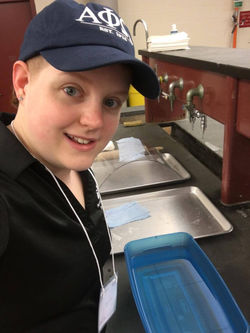 Alpha Phi Omega (APO) Co-ed Service Fraternity Lifetime Member Spring 2014 - Present |  Scientist in Residence Program, New York Academy of Sciences Spring 2018 |  Alpha Phi Omega (APO) Phi Chapter Executive Board: Vice President of Pledging (Fall 2015) Vice President of Recruitment and Retention (Spring 2016) Vice President of Fellowship (Fall 2016) Parliamentarian (Spring 2017) |
 Treasurer of the SUNY-ESF Earth Week Celebration Planning Committee Spring 2012, Spring 2013, Spring 2014 |  Treasurer of the SUNY-ESF PBE Club (formerly Papyrus Club) Fall 2013 - Spring 2014 |
Certifications and Accreditations
Certificate of Completion of Responsible Conduct of Research for Engineers Course
CITI Program - SUNY College of Environmental Science and Forestry
June 2025
Certificate of Completion of Independent Designing Your Online Course Training
Quality Matters - SUNY Onondaga Community College
Summer 2023
Certificate of Brightspace Fundamentals Training
SUNY Center for Professional Development
Summer 2023
Elementary Spanish Fluency
Duolingo; November 2016 - present
National Science Teaching Association (NSTA) Certificate of Seminar Series Participation; November 2022
Prioritizing Relationships and Equity - Leveraging Student Ideas to Accelerate Learning
National Science Teaching Association (NSTA) Certificate of Seminar Series Participation; August 2022
Promoting Diversity, Equity, and Inclusion Through Science and STEM Teaching
National Science Teaching Association (NSTA) Certificate of Seminar Series Participation; November 2021 - December 2021
Teaching Controversial Topics in Science
National Science Teaching Association (NSTA) Certificate of Seminar Series Participation; March 2018
Six Sigma Yellow Belt Certification
SUNY College of Environmental Science and Forestry; May 2016
National Safety Council First Aid Course - Basic First Aid
Syracuse University; Valid April 2015 - April 2017
National Occupation Competency Testing Institute (NOCTI) Certification in Forestry and Forest Products
McKinley High School; June 2010
Honors and Awards


Publications
Modeling radiative transfer in carbon-opacified fiber composites
Carvajal, Sergio A.; Paulien, Lucas; Elniski, Autumn; Daryabeigi, Kamran; Miller, Steve; Berg, Matthew J.
2026. International Journal of Heat and Mass Transfer, Volume 255, Oart 1, 127776
Current Citations: 0 (Google Scholar)
Current Citations: 0 (ResearchGate)
Analytical models of radiative transfer in fibrous insulation under collimated irradiation
Carvajal, Sergio A.; Paulien, Lucas; Elniski, Autumn; Daryabeigi, Kamran; Berg, Matthew J.
2025. International Journal of Heat and Mass Transfer, Volume 244, 126961
Current Citations: 0 (Google Scholar)
Current Citations: 0 (ResearchGate)
The Effect of Hot Water Extraction of Lignocellulosic Biomass and Recovered Lignin Addition on Fuel Pellet Properties
Elniski, A.
2023. PhD Dissertation. State University of New York College of Environmental Science and Forestry, Syracuse, NY.
Current Citations: N/A (Google Scholar)
Current Citations on ResearchGate Not Listed
Biogas Production from the Anaerobic Codigestion of Office Paper and Cow Manure in a Batch Reactor
Elniski, A.
2017. MS Thesis. State University of New York College of Environmental Science and Forestry, Syracuse, NY. ProQuest Dissertations and Theses. Web.
Current Citations: 1 (Google Scholar)
Current Citations on ResearchGate Not Listed
Effects of Substrate to Inoculum Ration on Biogas Production from Anaerobic Co-Digestion of Office Paper and Cow Manure
Elniski, Autumn R.; Chatterjee, Siddharth G.; Mondal, Chanchal; Doelle, Klaus
2019. Journal of Energy Research and Reviews 3(4): 1-15
Current Citations: 7 (Google Scholar)
Current Citations: 9 (ResearchGate)
Posters


Grants and Funding Opportunities
Development of a Criterion Referenced Instructional Tool for SUNY Engineering Programs to Support Student Remediation and Learning
SUNY Innovative Instruction Technology Grants (IITG) and Open Educational Resources (OER) Impact Grant.
Fiscal Year 2026-2027.
Principal Investigator.
Award: $14,000
Click here to learn more about the SUNY Innovative Instruction that supports the grant.
Development of a Criterion Referenced Instructional Tool for SUNY Engineering Programs to Support Student Remediation and Learning
SUNY Innovative Instruction Technology Grants (IITG) and Open Educational Resources (OER) Impact Grant.
Fiscal Year 2025-2026.
Co-Investigator.
Award: $14,500
Click here to learn more about the SUNY Innovative Instruction that supports the grant.
Professional Presentations and Related Activities

NASA Radiation Mitigation Review 2024
Research Presenter.
This event was a collaboration between the Air Force Office of Scientific Research (AFOSR) and the National Aeronautics and Space Administration (NASA) about research pertaining to radiation mitigation. Members of several universities and organizations – including SUNY-ESF, Kansas State University, Purdue University, Heetshield, Sabanci University, NASA Langley, University of Connecticut, University of Southern California, and the NASA Headquarters – presented on their research work. My role in this presentation was to describe the manufacturing process of our Opacified Fibrous Materials (OFI) on a paper machine with papermaking principles, as well as explain the crossover in paper property testing with OFI examination. Future work on Scanning Electron Microscopy (SEM) and pilot scale production of the OFI was also presented.


AFOSR joint Review for 2023 and 2024
Research Presenter.
These reviews with the AFOSR occurred at the University of Notre Dame and University of California – Davis, respectively. Several universities participating in research for the AFOSR – including SUNY-ESF, UC-Davis, and the University of Notre Dame – presented on the status of our respective research projects to members of the AFOSR and affiliated organizations. My portion of the first presentation involved the study on handsheet furnishes of our Opacified Fibrous Materials (OFI) in which ratios of the three key ingredients to the insulation materials were modified to find the optimal furnish combination. Mechanical properties of the handsheets were examined as preliminary optimization parameters. My portion of the second presentation focused on the initial production trial of insulation material on the pilot paper machine at SUNY-ESF. This consisted of a “base sheet” that did not contain opacifiers to understand the operation of the machine with this non-traditional wet-laid material.


International Bioenergy and Bioproducts Conference 2022
Presenter. This conference will occur in Providence, RI and will be sponsored by the Technical Association of the Pulp and Paper Industry (TAPPI). Several presenters of various topics were accepted to speak about their research, publications, and other related topics. I will attend the conference as an invited presenter, with the topic of the presentation being “The Effects of Hot Water Extraction of Lignocellulosic Biomass on Fuel Pellet Properties” under the category of “Innovative Bioproducts and Biopolymers from Biomass/Biomass Conversion and Densification”.


TAPPI Student Summit 2023
Head of Engineering Competition and Roundtable Discussion Leader.
For the Engineering Competition, I designed, tested, and facilitated the event for the Student Summit. I also led a small team of judges during the event to ensure its smooth operation. The goal of the competition was to design a device with the materials provided to hit a target with a golf ball. More information can be found in the document below.
Students circulated between tables during the Roundtable event, with each table conversing about a different topic. Duties included leading a discussion about the subject. I participated in two roundtables: “From Internships to Research: Two Worlds of Working with Paper Related Fields” and “Industrial Wastewater Treatment in the Pulp and Paper Industry”.


TAPPI Student Summit 2020
Roundtable Discussion Leader. Students circulate between tables during this event, with each table conversing about a different topic. Duties included leading a discussion about the subject, though I also made a handout for each student that participated at my table. My topic was “Three Questions to Ask About Wastewater Treatment”.


International Forest Biorefining Conference and Symposium on Lignocellulosic Material 2019
Presenter. This joint conference occurred in Thunder Bay, Ontario, Canada and was sponsored by the Lakehead University Biorefining Research Institute. Several presenters of various topics were accepted to speak about their research and other related topics. I attended the conference as an invited presenter, with the topic of the presentation being “Valorization of Hot Water Extracted Lignin from Different Angiosperms” under the category of “Bioproducts” at the Conference.


TAPPI Student Summit 2018
Roundtable Discussion Leader. Students circulate between tables during this event, with each table conversing about a different topic. Duties included leading a discussion about the subject, though I also made a handout for each student that participated at my table. My topic was “Environmental Impact and Water Treatment [in the paper industry]”.
Panel Moderator. The Student Summit offers panels covering a multitude of topics with students and industry officials participating. This is an open dialogue of questions centered around the subject at hand with a moderator to oversee the pace, civility, and quality of the event. Duties also included coordinating with the panel members about the topic and information about themselves to present to the audience via Powerpoint. I served as a panel moderator with the topic of “How to get the most out of an Internship/Co-op”.


TAPPI Student Summit 2017
Roundtable Discussion Leader. Students circulate between tables during this event, with each table conversing about a different topic. Duties included leading a discussion about the subject, though I also made a handout for each student that participated at my table. My topic was “Humbly Promoting Yourself without Boasting”.

Guest Lectures and Speaking Opportunities
ECH 380: Process Simulation Modeling
Spring 2025
This course focuses on the modeling of processes with two simulation software packages (SuperPro and Aspen Plus), with minor emphasis on economic analysis of projects. Dr. Deepak Kumar – the instructor of the course – invited me to guest lecture to his class on “Profitability and Economic Evaluation of Projects”, which built upon his lecture on capital investment, revenue, and operating costs by delving into gross profit, depreciation, income taxes, net profit, cash flow tables, return on investment, breakeven point, and net present value as measures of profitability and economic evaluation for choosing between project alternatives.
PSE 350: Fiber Processing
Spring 2018, Spring 2019, Spring 2020, Spring 2021, Spring 2022
This collaboration with Mr. Burry of the Paper and Bioprocess Engineering Department included a guest lecture for his undergraduate class in Fiber Processing and a laboratory demonstration/activity. The topic of the lecture was “Fuel Pellets: A Brief Introduction” and focused on the main reasons why we pelletize biomass and the different parts of the lab scale Pelheat Pelletizer in the basement of Walters Hall on the SUNY-ESF Campus. Samples of wood chips, milled biomass, and wood pellets made from Willow, as well as the ring die used in the Pelletizer, were passed around to the students throughout the lecture. During the demonstration, pelletizing with the Pelheat Pelletizer was attempted with feedstock that the students processed in an MK Digester in a previous lab session with the lab instructor (Mr. Burry). Throughout the lab, the students were able to observe the pelletizing process in person and ask questions about the making of pellets at the lab scale.
BPE 300: Introduction to Industrial Bioprocessing
Fall 2017
This was an invitation from Professor Sus Ikuta to give a guest lecture for the “Introduction to Industrial Bioprocessing” class. The presentation was split between lecturing about the material and a three-part case study activity for the students to complete in groups throughout the class period. The topic of the presentation was “The Importance of Wastewater Treatment and an Introduction to Anaerobic Digestion”.
Joachim Speaker Series
Fall 2016
The Joachim Speaker Series was an on campus, weekly event hosted by the Joachim Fellows and Assistants in the Paper and Bioprocess Engineering Department. The series featured topics ranging from management and business principles to resume building to topics on research occurring within the department, though the sessions are open to the entire campus. My Speaker Series topic involved the basics of industrial wastewater treatment, with the title being “What the Effluent? Getting Your Feet Wet in Industrial Wastewater”.
Other Relevant Teaching Experiences

Scientist in Residence Program
Spring 2018
The Scientist in Residence Program (SiR) is an opportunity for students at SUNY-ESF to volunteer in local middle schools in the City of Syracuse that have an underrepresented and underserved population of students attending the school. Through this program, I helped tutor students in the math and science lessons that they were learning in the classroom, as well as brought hands-on activities for the students to engage in. Topics included sexual reproduction, natural selection, and genetics in the science class and percentages and decimals in the math class.
This work was performed in association with ESF 503: Seminar on University Outreach and Public Service in which topics about science education were explored. Two assignments included creating a Sample Lesson Plan for a NGSS-related science topic and implementing a science lesson in the classroom. The Sample Lesson that I wrote was about Photosynthesis. The science lesson my group designed was about Darwin's Finches and evolution (pictured). The Sample Lesson and a worksheet from the in-class science lesson can be found below.
Sample Lesson Plan on Photosynthesis
Girl Scout and Boy Scout Merit Badge Day
Spring 2015, Fall 2016, Fall 2017, Fall 2018
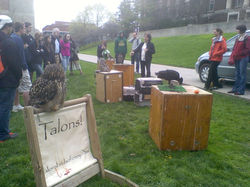
Working through Alpha Phi Omega, I assisted in the badge earning activities of both Girl Scouts and Boy Scouts. For the Boy Scouts, I aided in the Pulp and Paper Badge by leading hands-on activities for making and testing paper and answering questions about the pulp and papermaking process. For the Girl Scouts, I created a lesson plan for the Business Etiquette Badge and implemented the course activities, and I assisted in the execution of the Outdoor Art Creator Badge (pictured). I also co-planned the materials for the Kitchen Chemist badge and assisted in teaching the lesson to the Girl Scouts.
Kitchen Chemist/Home Scientist Badge Lesson Plan
Business Etiquette Badge Lesson Plan and Materials


Professional Memberships and Organizations
Order of the Engineer
Link 100; SUNY College of Environmental Science and Forestry
May 2022 - Present
The Order is a roster of engineers in the United States who have participated in an Engineer's Ring Ceremony and who have publicly accepted the "Obligation of the Engineer".
The purpose is to stimulate formal public recognition by engineers in the United States of two basic principles: the primary purpose of engineering is service to the public and all members of the engineering profession share a common bond.
It's purpose in the USA is also to foster a spirit of pride and responsibility in the engineering profession, bridge the gap between training and experience, and present to the public a visible symbol identifying them as an engineer.
This Order was originally founded as a means to commit to and promote ethical engineering practices. It originated in Canada where graduates of the Engineering Programs at the University of Toronto participated in a Ritual of the Calling of an Engineer. This was in response to the Quebec Bridge Disaster in which 75 people died due to faulty engineering calculations. Participants in the Canadian Ceremony - up until recently - were given rings made from the steel of the bridge as a reminder of the duties and ethical responsibilities of the engineering profession. The Order and Ceremony was later adopted by various colleges in the United States, many of whom follow ABET Accredited programs.
The Order of the Engineer is a non-membership based organization in which there are no meetings or other obligations. Your only obligation is to uphold the Oath of the Engineer and practice engineering in an ethical manner.
Click Here to See Additional Information About the Order of the Engineer

American Society for Engineering Education
Non-Profit Organization of Individuals and Institutions for Education in Engineering
October 2020 - Present
The American Society for Engineering Education (ASEE) is a non-profit organization that promotes furthering education in engineering and engineering technology. They consist of worldwide leadership and members that range in discipline from industry to academia and beyond. The ASEE develops policies and programs that enhance professional opportunities for members through networking, newsletters, trainings, conferences, and more.
While participating in this organization, I have enhanced my professional development engaging with ASEE Memberships across different divisions and by attending an ASEE sponsored Conferences.
Conferences:

National Science Teaching Association
Science Educator and Professional Organization
September 2017 - Present
The National Science Teaching Association (NSTA) is an organization consisting of science educators and professionals committed to the best practices in teaching science and STEM. This organization connects members and offers professional development through access to published journals, books and lesson plans, networking events, conferences, and trainings. I joined this organization when starting my Master of Science in Teaching and Curriculum at Syracuse University through the Scientist in Residence Program through SUNY-ESF and the New York Academy of Sciences.
While participating in this organization, I have enhanced my professional development engaging with the Journal of College Science Teaching and by attending NSTA sponsored Training Seminars and Conferences.
Conferences and Seminars:
Teaching Controversial Topics in Science
Promoting Equity, Diversity, and Inclusion Through Science and STEM Teaching
Prioritizing Relationships and Equity - Leveraging Student Ideas to Accelerate Learning
Alpha Phi Omega
National Co-ed Service Fraternity
February 2014 - Present
Alpha Phi Omega is a co-ed, national service fraternity founded in 1925. Its mission is to
train campus and community leaders through community service. It has three pillars: Leadership, Friendship, and Service. The Phi Chapter is in Syracuse, NY and has served students from both Syracuse University and SUNY-ESF since 1932. Through this fraternity, I have completed nearly 500 hours of community service and have served on the Executive Board of the chapter for four consecutive semesters in my graduate career. My positions included Vice President of Pledging (New Member Education), Vice President of Recruitment and Retention, Vice President of Fellowship, and Parliamentarian. I am a lifetime member of this organization and received a Distinguished Service Key, the highest honor a chapter can bestow.
Technical Association of the Pulp and Paper Industry (TAPPI)
Non-Profit, Non-Governmental Organization
September 2012 - Present
TAPPI is an international, non-profit, non-governmental organization created in 1915. It
consists of engineers, scientists, managers, academics, and others involved in the pulp, paper,
and related industries. They host several conferences, including a Student Summit that allows college students in paper engineering and related majors to network with industry officials, attend workshops, and interview for internship and full-time positions. I have participated in these events both as an attendee and as a member of the planning committee.
Academic Interests
Pulp and Paper Manufacturing, Characteristics, and Modification
Anaerobic Digestion and Biogas Production
Biomaterials
Engineering
Environmental Science, Forestry, and Ecology
Science and Engineering Education and Pedagogy
Water and Wastewater
Treatment
Wood
Chemistry
Lignocellulosic Biomass Production and Conversion into Renewable Products
Environmental Health
and Safety
Instructional Design
Solutions
Relevant Course Work
Mathematics and Computer Computations | Paper Science and Engineering | Management, Writing, and Education | Chemical, Biological, Physical, and Environmental Sciences | Economics | Basic and Advanced Engineering |
|---|---|---|---|---|---|
Calculus I, II, III | Art and History of Papermaking | Management in the Paper Industry | General Chemistry I, II | Introduction to Economics | General Physics I, II |
Computing Methods for Engineers | Introduction to Papermaking | Principles of Management for Environmental Professionals | General Chemistry Lab I, II | Engineer Design Economics | General Physics Lab I, II |
Differential Equations | Pulp and Paper Laboratory Skills | Career Strategies for Women in Environmental Professions | Organic Chemistry I, II | Introduction to Managerial Accounting | Principles of Mass and Energy Balance |
Probability and Statistics for Engineers | Papermaking Wet End Chemistry | Writing for Science Professionals | Organic Chemistry Lab I, II | Principles of Accounting | Engineering Thermodynamics |
Six Sigma Yellow Belt Training | Fiber and Paper Properties | Writing for Scientific Publication | Water Resource Management | Water Pollution Engineering | |
Statistical Analysis | Fiber Processing | Fundamentals of Teaching for Non-Teaching Majors | Methods in Ecological Treatment Analysis | Professional Engineering Skills Seminars | |
Experimental Design and Analysis of Variance | Papermaking Processes | Teaching College Science | Applied Environmental Microbiology | Air Pollution Engineering | |
Seminar on College Teaching | Physical Chemistry I | Fluid Mechanics | |||
The American College and University | Physical Cell Biology | Equipment Troubleshooting and Maintenance | |||
Argumentation in Math and Science | Cell Biology Recitation | Transport Phenomena | |||
Problems in Science Curriculum | Biorenewable Fibrous and Non-Fibrous Products | Introduction to Environmental Engineering | |||
Narrative Research and Creative Practice | Foundations of Environmental Health | Statics and Dynamics |